
For many organisations, a website project follows a familiar pattern: plan it, design it, build it, launch it – and move on to the next thing. But launching a website shouldn’t be the end of the project. In many ways, it is where the real work begins.
A website is not a static brochure that sits on the internet waiting for someone to visit. It is the anchor of your marketing efforts and part of an organisation’s wider digital presence. Like any other business asset, it needs to be managed, updated, measured and improved.
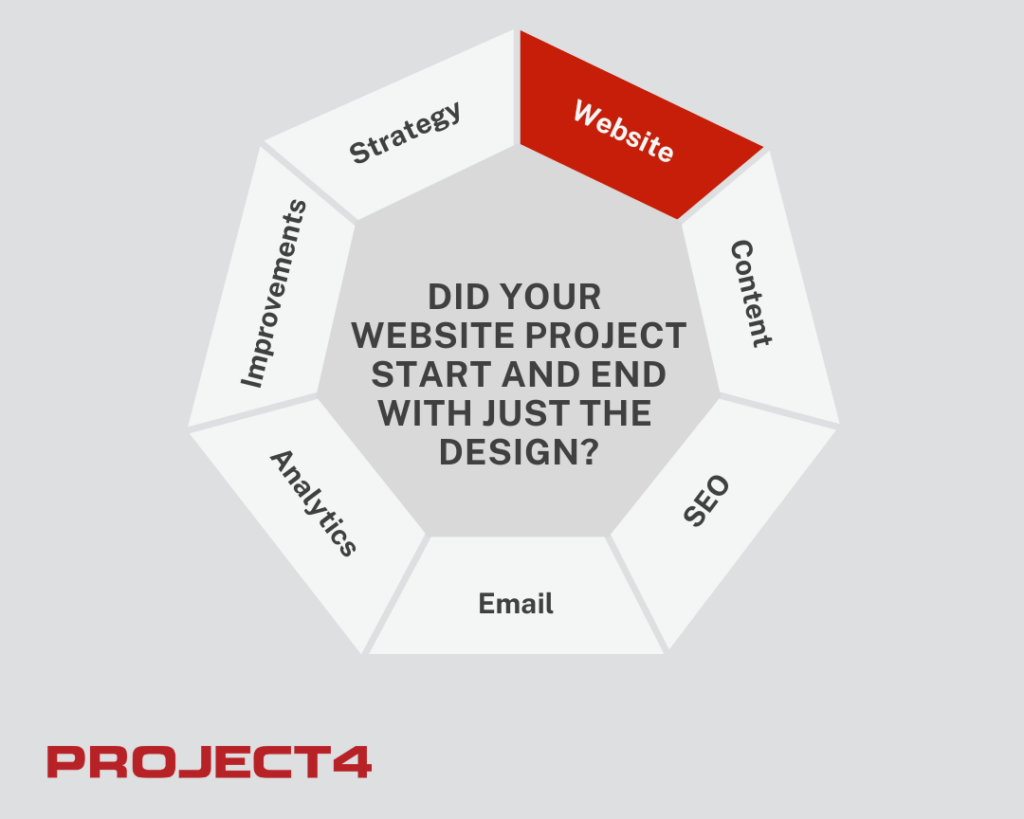
At Project4, we see the process as an ongoing lifecycle:
Strategy → Website → Content → SEO → Email → Analytics → Improvement
Each part supports the others.
1. Strategy & Planning
Before thinking about pages, colours and layouts, it is important to understand what the website and wider digital presence are actually supposed to achieve.
What do you need to communicate? Who are you trying to reach? What information do they need? Where should that information appear? What should people do after finding it?
Content planning and content calendars can help turn these questions into an ongoing plan rather than leaving the website to become static after launch.
Plan what you need to say and where it needs to go.
2. Websites & SEO
A well-designed website is important, but design alone doesn’t make a website successful. It needs to be easy to use, technically sound, kept up to date and discoverable through search engines.
SEO is therefore not something that should only be considered when a website is launched. Search behaviour changes, competitors change and the content on your own website changes. There are always opportunities to improve how your website performs in search.
Build, manage and optimise websites that people can find and use.
3. Content & Storytelling
A website without useful, regularly updated content can quickly become stale. News, articles, stories, case studies, insights, project updates and other forms of content give people a reason to return to your website. They can also provide valuable material for search engines and give your organisation something meaningful to share through other channels.
This is why content development and blog strategy should be considered part of the website’s ongoing life, not something that ends when the pages are populated.
Create useful content that keeps your digital presence alive.
4. Email & Automation
Getting someone to visit your website is only part of the relationship. Email provides a way to stay connected with people who have already shown an interest in your organisation, products or services.
Newsletters can keep audiences informed, while automated emails can handle routine communication, follow-ups and customer journeys without requiring someone to send every message manually.
Stay connected with customers and automate routine communication.
5. Analytics & Improvement
How do you know whether your website is actually working? Basic analytics can tell you where visitors are coming from, what they are looking at and how they are interacting with your website.
This information can help identify what needs attention and where improvements can be made. Analytics doesn’t need to become an exercise in producing complicated reports. Even basic data can help you make better decisions.
Understand what is working and continually improve it.
6. Brand & Communications
Your website is one part of how your organisation presents itself to the world.
The messages, language, imagery and visual identity you use across your website, publications and other communications should work together and present a clear, consistent picture of who you are and what you do.
Make sure your organisation communicates clearly and consistently.
Your website is the beginning, not the end!
It’s easy to think of a website as a project with a beginning and an end:
Brief → Design → Development → Launch → Done.
But a more useful way to look at it is as an ongoing cycle:
Strategy → Website → Content → SEO → Email → Analytics → Improvement
The website provides the platform. Content gives people a reason to engage with it. SEO helps them find it. Email helps you stay connected. Analytics helps you understand what is working. And the insights from all of these activities feed back into the next round of planning.
That is what turns a website from a digital brochure into a working business and communications tool.
Beyond the website launch
A website launch should be the start of an ongoing digital presence, not the point at which the work stops.
If you are investing in a new website, it is worth thinking beyond the design and development itself. Consider what content you will publish, how people will find you, how you will stay connected with them and how you will know whether the website is doing its job.
The question isn’t simply, “Do we have a website?”
It is, “What are we doing with it?”